
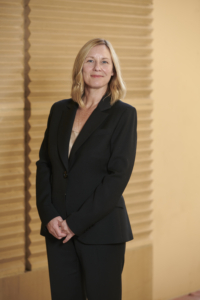
Amander Clark
(photo Credit Don Liebig)
email
clarka@ucla.edu
mailing address
Box 957246, Department of Molecular, Cell and Developmental Biology, UCLA
Los Angeles, CA 90095
office
Room No 490 B, 615 Charles E Young Drive South, Biomedical Sciences Research Building (BSRB)
Amander Clark, PhD is Professor of Molecular, Cell and Developmental Biology at UCLA, and Founding Director of the UCLA Center for Reproductive Science, Health and Education. An award-winning scientist and internationally recognized expert in stem cell biology, developmental biology, and reproductive science, her current work centers on ovarian health, the formation of the ovarian reserve, and the development of next-generation stem cell–based tools and technologies to improve health and health-span. Professor Clark has authored more than 100 scientific articles cited over 20,000 times, and has been honored with awards from the International Society for Stem Cell Research, the Society for the Study of Reproduction, the Founders Medal from the Australian Society for Reproductive Biology, the Concern Foundation, the JM Foundation, and the Lance Armstrong Foundation. She is a frequent subject-matter expert for the New York Times, The Economist, The New Yorker, and Public Radio. From 2023–2024, Professor Clark served as President of the International Society for Stem Cell Research, the leading global non-profit advancing excellence in stem cell science and its applications to human health. Alongside her research and teaching, she serves on numerous boards and executive committees, including the National Academy of Sciences, Engineering, and Medicine’s Health Science Policy Board (2023–2025) and the executive committee of the Center for the Study of Women/Barbra Streisand Center at UCLA. Through her research, service, and teaching, Professor Clark is committed to scientific practices shaped by multidisciplinary collaboration and genuine engagement with the public.
Background
Dr. Clark’s career in stem cell biology began in 2002 as a postdoctoral fellow in the laboratory of Dr. Renee Reijo Pera at UCSF, where she studied both the fundamental biology of human embryonic stem cells and the molecular mechanisms of human germ cell formation. At the time, only a handful of laboratories worldwide were working with human embryonic stem cells as the field was constrained by serious technical hurdles and an uncertain national and international policy landscape. Despite these obstacles, Dr. Clark and Dr. Reijo Pera were the first to show that human germline cells could be differentiated from human embryonic stem cells, a landmark discovery, cited more than 700 times, that became the foundation of Dr. Clark’s research program at UCLA.
UCLA
Dr. Clark joined the UCLA faculty in 2006 as Assistant Professor, earning tenure as Associate Professor in 2012, becoming Associate Professor and Vice Chair in 2013, Professor and Vice Chair in 2015, and serving as Chair of the Department of Molecular, Cell and Developmental Biology from 2017–2022. She is now the inaugural Director of the Center for Reproductive Science, Health and Education, whose mission is to ensure reproductive science is equitable, accessible, and inclusive, so that upstream scientific innovation translates into better lives downstream, at the point of care.
Affiliations
Key Member of the UCLA Broad Stem Cell Research Center.
Member of the Cell and Developmental Biology Home Area.
Member of the Gene Regulation Epigenomics and Transcriptomics Home Area.
Member of the Jonsson Comprehensive Cancer Center Cancer Stem Cell Biology Program Area.
Director of the UCLA Center for Reproductive Science, Health and Education.